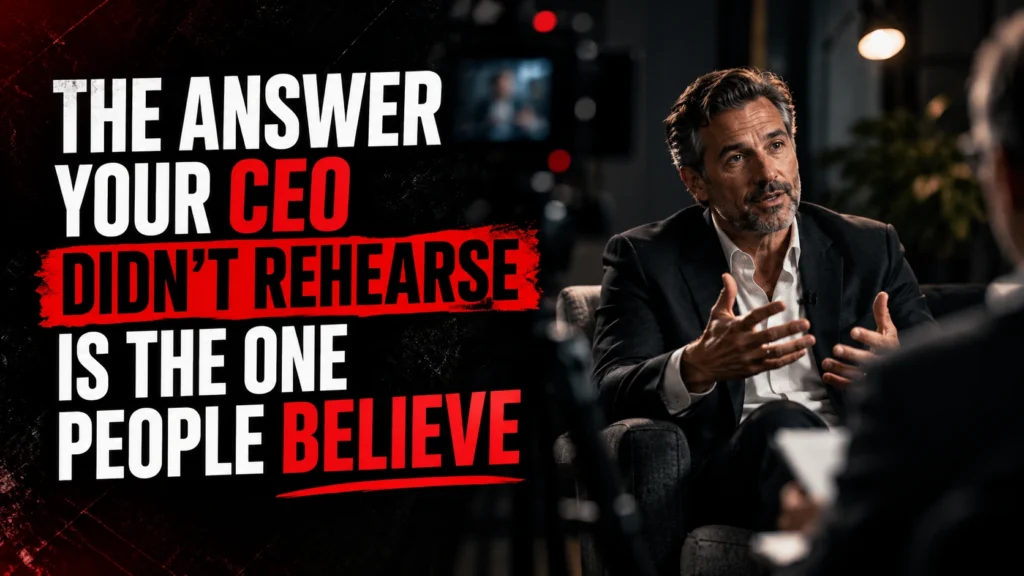
You know the video. The CEO at the end of a boardroom table, talking about “our people” and “the journey ahead”, eyes drifting to the teleprompter.
Nothing in it is wrong. Nobody believes it either.
That’s a real problem. In the 2025 Edelman Trust Barometer, a survey of more than 33,000 people in 28 countries, 69 per cent said they worry that business leaders, government officials and journalists deliberately mislead them.
So where do people believe public figures? Look at Vogue’s 73 Questions, which has followed celebrities through their homes in one continuous take since 2014. Questions come fast, with no time to prepare. Speed strips out the approved phrase, and you see how someone actually thinks.
The usual advice is for leaders to “be more vulnerable”. A 2018 study by Gibson, Harari and Marr found that when senior people disclosed a personal weakness, others saw them as lower in status and less influential. Peers who shared the same kind of thing paid no price.
The difference is between confessing a weakness and showing who you are. Audiences don’t need the first. They want the second: taste, habits, humour, the decision they’d reverse.
That’s what a good rapid fire does. Answering fast, without notes, already signals competence. The small unguarded answers make a leader human without making them look weak.
The questions matter most. Skip “What does leadership mean to you?” Ask about their first job, the worst advice they ever took, the decision they’d undo. Share the themes in advance, never the exact wording. And keep the pause before an honest answer, because that’s usually your best clip. It’s the moment we build every Ruckus rapid fire around.
Most CEO videos are built so the leader can’t say anything wrong. That’s exactly why nobody remembers what they said.