
The Death of Attention Is Killing Bad Brands First
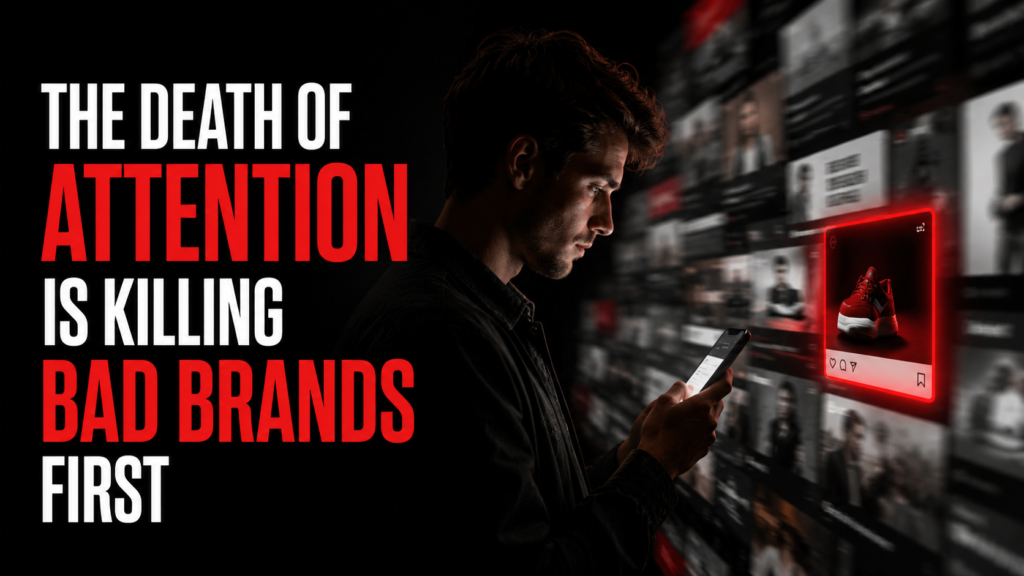
People haven’t lost the ability to pay attention. They’ve become extraordinarily good at filtering. Every day, the average human encounters thousands of pieces of content. The brain — brilliant, ruthless, efficient — decides in milliseconds what deserves processing and what gets scrolled past. This isn’t distraction. This is survival. And most brand content is not surviving it. The narrative that “nobody has attention anymore” is a convenient excuse for brands that are, if we’re being honest, genuinely boring. TED Talks still hold audiences for 18 minutes. Long-form podcasts have never been more popular. People binge eight-hour documentary series on weekends. Attention is not dead. Tolerance for mediocrity is. What scroll culture has actually done is compress the window of judgment. You have two seconds to earn the next two seconds. Then two more. Attention is not given — it’s renewed, moment by moment, based on one question: is this worth my time? Clarity beats complexity. Always. A brand that knows exactly what it stands for, communicates it without apology, and delivers it in a way that respects human intelligence — that brand never has an attention problem. The brands struggling with reach are not struggling because the algorithm changed. They’re struggling because they optimized for impressions instead of impact. Because they said something safe instead of something true. Because they designed content for approval instead of for humans. Entertainment is not the opposite of business. In a world fighting for attention, entertainment is a business strategy. Your audience is not distracted. They’re just waiting for a reason to stop.
Your Employer Brand Is Already Being Built… Without You
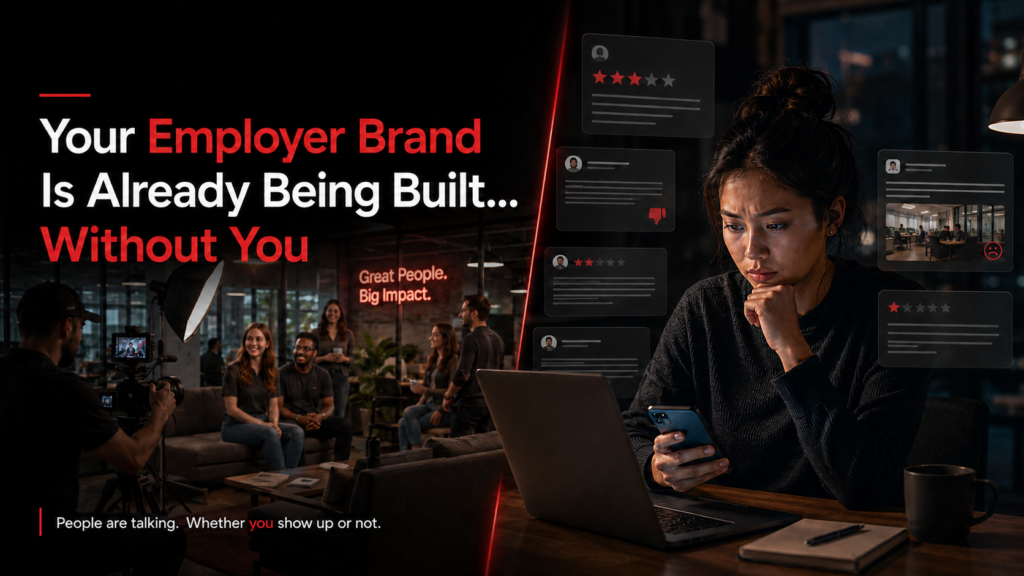
Right now, while you’re reading this, someone is writing about your company online. Maybe it’s a frustrated employee on Glassdoor. Maybe it’s a brilliant candidate sharing their interview experience on LinkedIn. Maybe it’s a star performer explaining to a friend why they just quit. Your employer brand is being built — with or without your participation. Most organizations discover this at the worst possible moment: when talent pipelines dry up, when recruiters report candidates dropping out mid-process, when internal morale quietly collapses. The instinct then is to create a “Life at [Company]” video. Smiling employees. A ping pong table. Someone from HR explaining “we’re really like a family here.” Candidates see through it in seconds. Because they’ve already read the reviews. Here’s the truth about employer branding: you cannot manufacture culture. You can only reveal it. And the moment your content contradicts what employees are already saying, you don’t just lose candidates — you lose credibility. Authentic employer branding means letting real people tell real stories. It means accepting that imperfect is more convincing than polished. It means understanding that Gen Z candidates are doing due diligence on your culture the same way they research a product purchase. LinkedIn is no longer just a job board. It’s a reputation engine. Every post your leadership makes, every story your employees share, every response to a negative review — all of it is your employer brand in action. The brands winning the talent war are not the ones with the most edited videos. They’re the ones whose internal story and external story are the same story. Is yours?
AI Will Not Replace Creative Agencies. Lazy Agencies Should Be Worried.
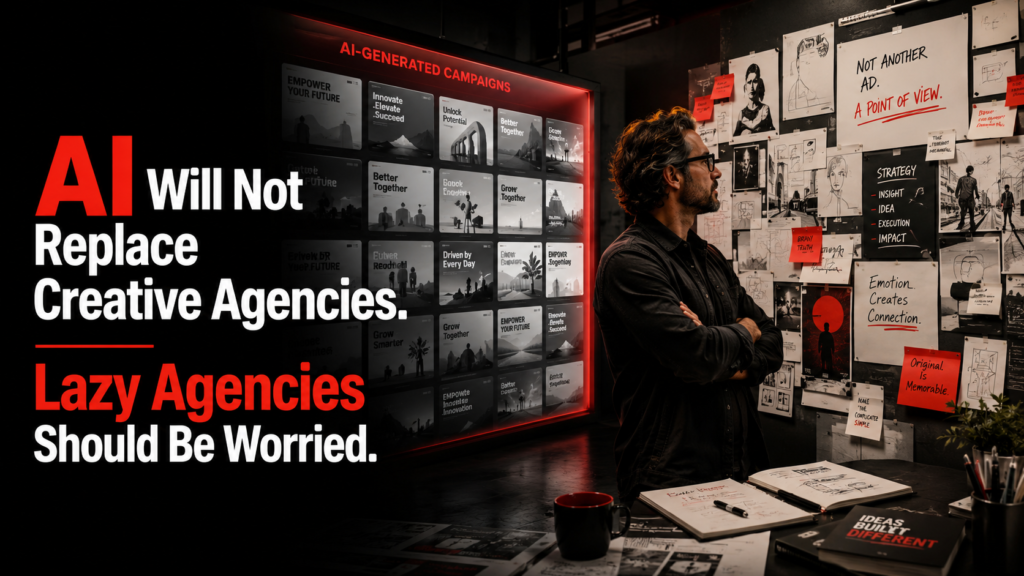
Every week, someone announces that AI will destroy creativity. Usually through a post generated by AI. Interesting times. The fear is understandable. AI writes. Designs. Edits. Generates videos. Creates campaigns in seconds. But here’s what most people are missing: AI is not replacing creativity. It is exposing the absence of it. For years, many agencies survived by recycling safe ideas inside fancy presentations. Same campaigns. Same buzzwords. Same “bold” concepts approved by twelve nervous stakeholders. AI is dangerous only to work that was already generic. Because when everyone has access to the same tools, the only real differentiator is judgment. Taste. Perspective. Originality. Emotional intelligence. Strategic thinking. A calculator didn’t kill mathematics. Photoshop didn’t kill art direction. Spotify didn’t kill musicians — it killed the middlemen who added no value. AI will do the same. It will eliminate the forgettable. And it will amplify the exceptional. The agencies thriving in this era are not the ones panicking about prompts. They’re the ones who have always led with thinking. Agencies where the idea comes first, and the tool — whether human hands or machine intelligence — is just how it gets made. Prompting is not strategy. Speed is not creativity. Volume is not value. At Ruckus, we’ve always believed that great creative work begins with a point of view. AI doesn’t change that. It just raises the stakes for everyone who never really had one. The question is no longer: Can AI do what you do? The question is: Can you do what AI can’t?
Why Most Corporate Videos Feel Like Hostage Messages
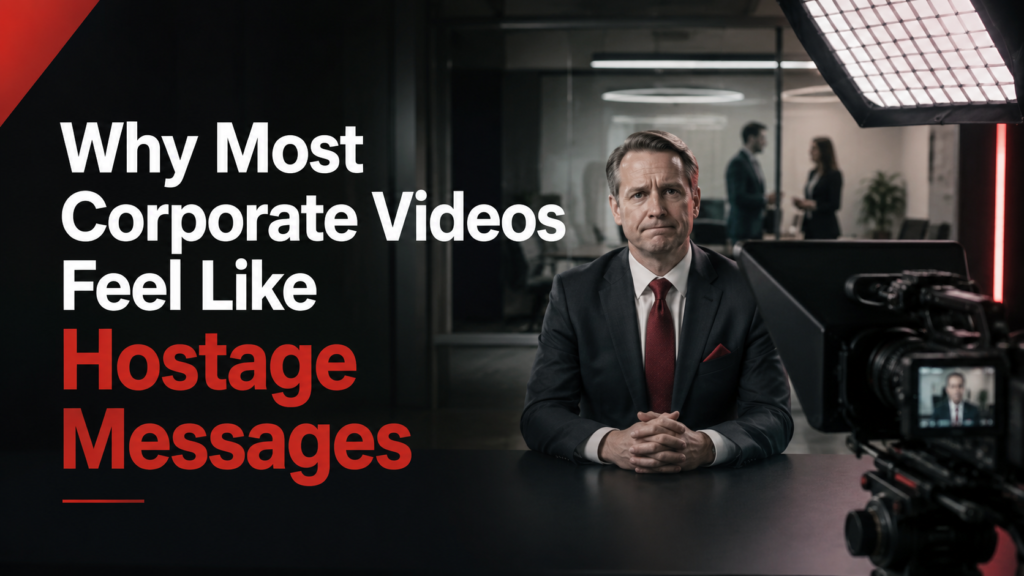
Somewhere along the way, corporate communication became emotionally unavailable. The lighting improved. The cameras got sharper. Drone shots arrived. Background music became cinematic. And somehow — the soul disappeared. Today, most corporate videos look expensive but feel empty. You watch them and immediately know what’s coming: a CEO walking slowly through a glass office. People fake-laughing in meetings. Someone pointing at a laptop screen. Words like innovation, excellence, synergy, transformation. Nobody remembers any of it. Because humans are not moved by polish. They are moved by truth. The problem is not production quality. The problem is emotional honesty. Most companies don’t communicate to connect. They communicate to appear professional. And professionalism, unfortunately, has become a mask. Real stories are messy. Real leadership has uncertainty. Real workplaces have tension, ambition, awkwardness, hope, burnout — humanity. But corporate storytelling strips out all human texture in the pursuit of looking “safe.” Safe is forgettable. The brands people truly remember today are the ones willing to sound human. Not perfect. Not dramatic. Human. That means less jargon. Less performance. Less pretending. And more clarity, more courage, more emotional intelligence. At Ruckus, we believe storytelling should make people feel something. Otherwise, it’s just an expensive slideshow pretending to be a film. So here’s the real question: Is your next video being made to impress your management team — or to actually move the humans watching it?
Why Most Pakistani Brands Sound the Same and How to Fix It
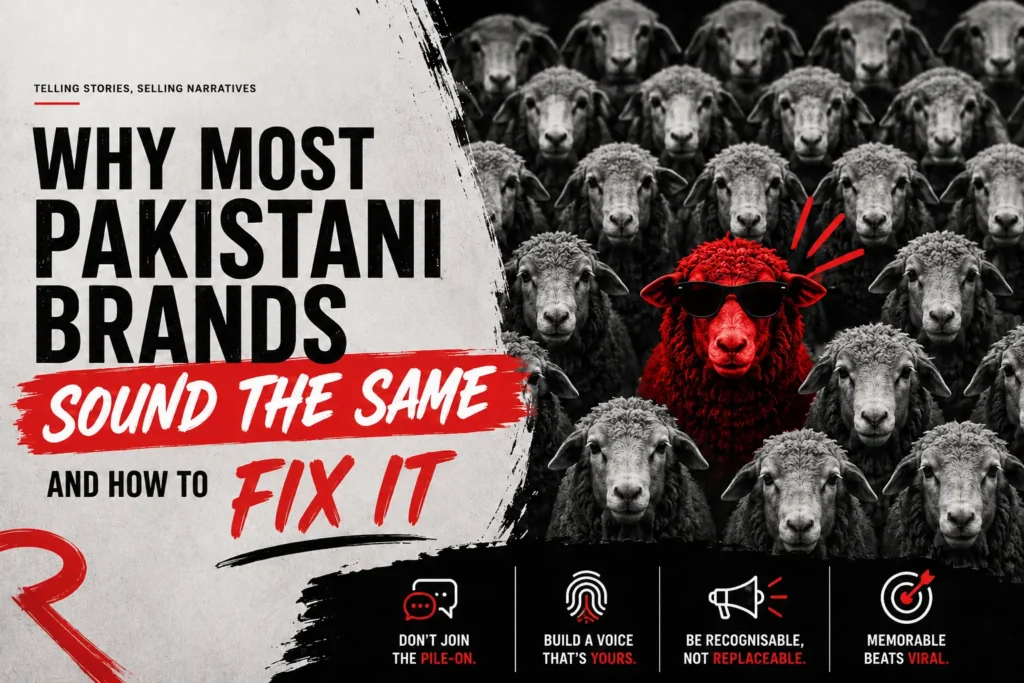
A lot of Pakistani brands are trying to stand out and somehow ending up in the exact same crowd. They jump on the same trends, use the same humour, and rush to join the same cultural moments. The content may feel timely, but after a while, it all starts sounding familiar. This is not a creativity problem. It is a sameness problem. The problem is not the trend. It is the pile-on. A trend can work brilliantly when the first brand gets there with speed, wit, and the right tone. That is why the KitKat theft moment worked. It was odd, timely, and easy for the brand to own. But once every other brand started making the same joke, the moment lost its edge. What felt clever at first quickly became crowded. That is usually how brand distinctiveness disappears. One brand creates a moment. Everyone else turns it into a template. Karachi’s billboard battle proved the same thing The recent billboard exchange in Karachi made the same point. Shan made the first move. Falak responded well. Then more brands joined in. The first few responses were sharp and fun. But once every brand starts adding its own version, the idea begins to lose freshness. The audience may still enjoy it, but the brands become harder to tell apart. There is a difference between joining a moment and overcrowding it. If you want a better example of lasting brand memory in Pakistan, look at Ufone. People still remember Ufone’s ads because they had a clear comic style that felt unique to the brand. The humour was not memorable because it was trendy. It was memorable because it felt recognisably Ufone. That is the real goal. Not just being funny. Not just being fast. Being recognisable. Why brands keep falling into this trap Because sameness is easier to approve. A familiar joke feels safer than an original one. A proven format feels safer than a distinctive voice. Trends give brands a shortcut to relevance, so they never have to stop and ask what they actually sound like. That may help with reach for a moment. It does far less for memorability. If your post could work with another brand’s logo on it, it is not strong brand storytelling. How to fix it Before jumping into a trend, ask: Does this actually sound like us?Are we adding something new, or just adding to the noise?Would people recognise this as our brand without the logo?Will they remember us, or just the reference? The strongest brands know their voice, know when a moment fits, and know when to sit one out. That last one is underrated. Final thought Most Pakistani brands do not sound the same because they are boring. They sound the same because too many are borrowing the same timing, tone, and shortcuts to relevance. The answer is not to be louder or faster. It is to be more recognisable. Because the brands people remember are not the ones that jump on every moment. They are the ones that still sound like themselves when everyone else is busy sounding like each other.